


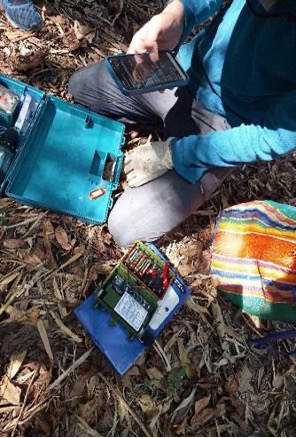
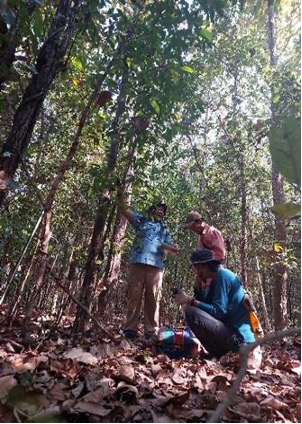
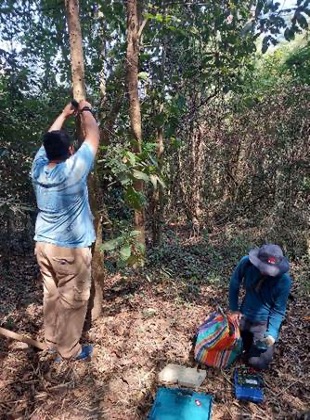
As part of the FORbEST biodiversity monitoring work, we are testing novel techniques to understand if there are more efficient ways to collect meaningful biodiversity data. One of these techniques requires us to place song meters throughout the forest to record bird and bat vocalisations. This blog shares the story of our Thai research team from the Department of Biology, Faculty of Science, Chulalongkorn University, Thailand. The team deployed Song Meter Mini 2 bird and bat recording devices in Lainan sub-district, Wiang Sa district, Nan Province, northern Thailand over two-days, February 15–17, 2026. Here, we briefly describe our study site and how we installed the devices in the forest.
The site characteristics
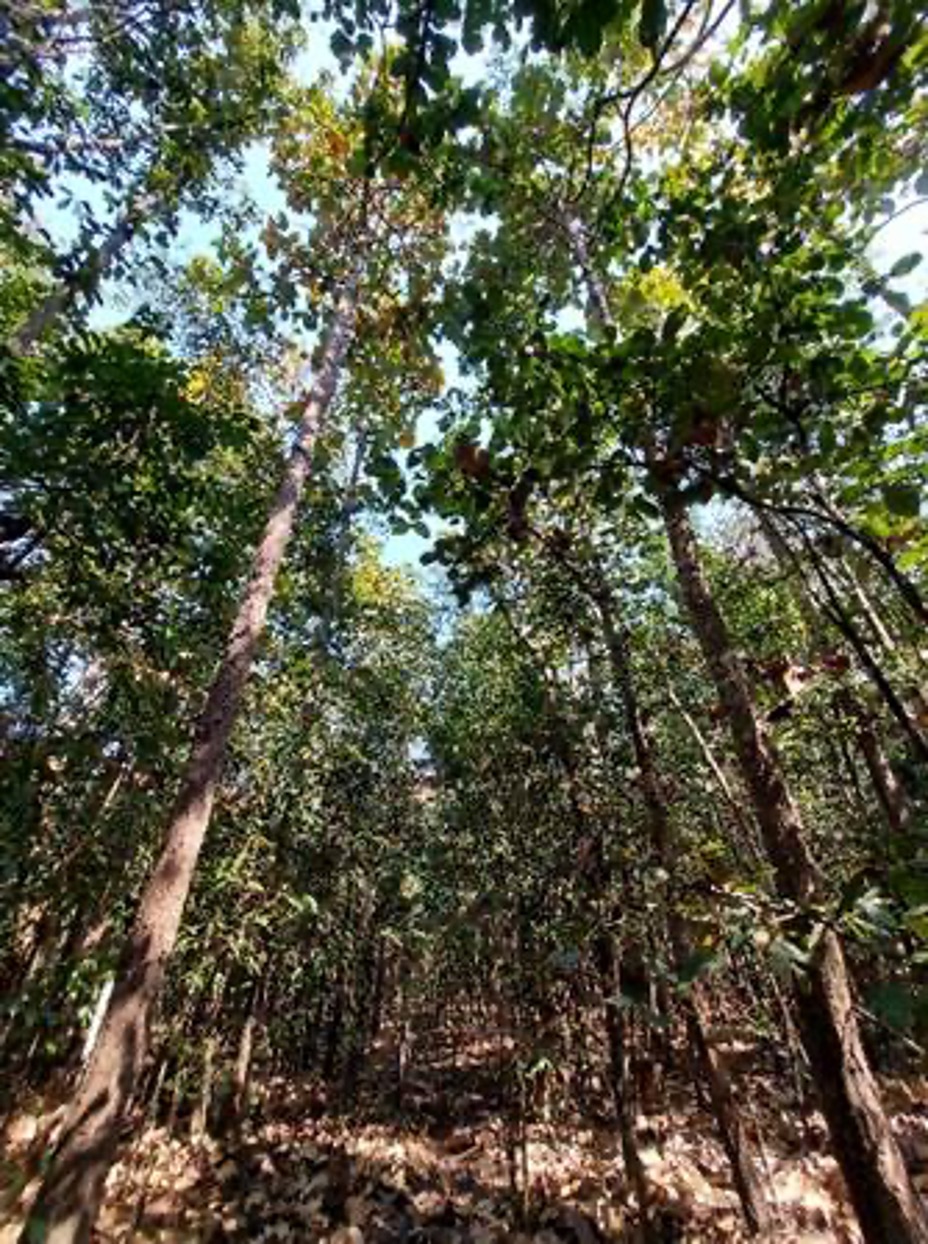
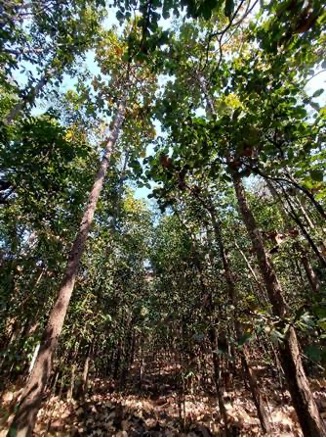
There are sub-communities of dry dipterocarp forest (an open, sun‑drenched woodland with hardy, drought‑tolerant trees on poor, sandy soils, relatively short trees with canopy layer is about 25-30 meters) and mixed deciduous forest (denser, greener, and richer in tree and wildlife diversity) within this deciduous forest area (broadleaf trees that shed their leaves seasonally).Burma Padauk(Pterocarpus macrocarpus ), Black Rosewood (Afzelia xylocarpa ), Burma Rosewood(Dalbergia oliveri ), Iron Wood(Xylia xylocarpa), Burmese Sal(Shorea obtuse ), Siamese Sal(S. siamensis ), Gurjuntree(Dipterocarpus tuberculatus), and Hairy Keruing(D. obtusifolius) are some of the notable tree species. Chulalongkorn University officials and local villagers manage and use the area in different ways. Depending on the season, they collect non-timber forest products (NTFPs) such as Sweet Melientha, or Wild Sweet Vegetable(Melientha suavis)young shoots (a highly nutritious indigenous vegetable in Southeast Asia, particularly known for its sweet leaf, tender texture, and distinctive aroma), and ant larvae (ant caviar; high in protein) for household consumption and sale to the market for extra income generation. According to research, this forest produces about 600 kg of edible wild mushrooms annually, Melientha’s shoot 600 kg/year, and ant larvae 3,500 kg/year, with an economic value of almost 1.2 million Thai Baht (32,500 Euro) per year. Additionally, this forest area is located near Wa River, a tributary of Nan River, and lowland floodplains used for agriculture, thus playing a role in carbon sequestration and biodiversity conservation.
The forest is made up of three distinct forest management and structural types, the team set up twelve bird and bat recording devices. The first zone represents an old woodland with many big trees and low tree density. The second zone, which is dominated by mixed deciduous tree species with a modest tree density, is situated around 200 meters above mean sea level. The third zone, located in the southern part, was once used for agriculture but was abandoned to regenerate naturally. It has a high density of small trees and is used for a variety of purposes, including the conservation of native red cattle breeds, the raising of frogs and earthworms, the cultivation of rare medicinal herbs, and the nursery of seedlings for reforestation activity in Nan and nearby provinces. Both wildlife and the ecosystem have been disturbed by these activities. As a result, the research team anticipates that each forest zone will have a variety of species and levels of carbon accumulation.
Point selection, installation, and data collection plan
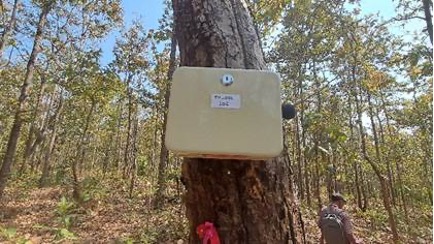
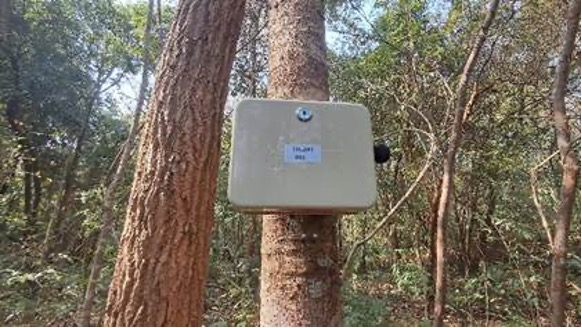
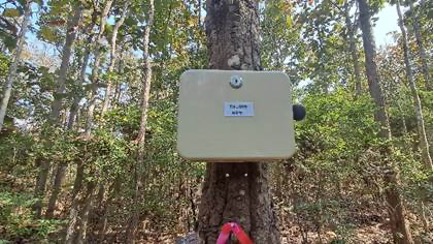
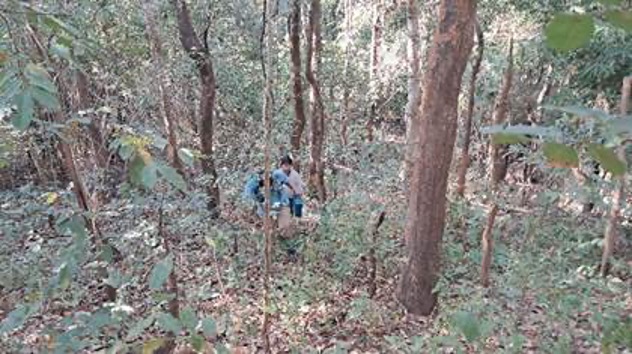
Thanks to UAV (Unmanned Aerial Vehicle) and GIS (Geographic Information Systems) software, the researchers identified the installation points and plot boundary. Point and plot locations were then transferred to Google Mymap and shared with field team members. Each day, the team walked to the point to install the equipment by following this satellite navigation system. The team installed each recording device in an additional steel box to prevent animals damaging the equipment and to avoid disturbances from people foraging for NTFPs. This is one of the challenges of carrying out long-term research, as tropical countries often face issues with equipment loss and damage, requiring regular monitoring. Another difficulty that often arises is finding the installed device when we revisit the point to collect data (change the memory card) and replace the batteries because of the dense trees and shrubs found in these forests. Which is why we used bright flagging on the trees to help relocate the song meters, as you can see in some of our photos.
The research team plans to inspect the equipment every month and will continue to set up plots to collect data on trees and soil fauna. According to this year’s weather forecast, Thailand is expected to have higher than normal temperatures due to the influence of El Niño. It is anticipated that during the next forest visit, the team will encounter hotter weather, and trees will shed more leaves than they currently do. How will the forest change? Will we find all the equipment? We invite everyone to follow the research team’s blog, and if we discover anything interesting in this area, we will promptly share it to exchange knowledge.
For more blog posts and other updates, see Updates – FORbEST project