The Sila Living Lab, established within the Sila National Park in southern Italy (Calabria region), is one of the six Living Labs created under the Horizon Europe project FORbEST (Safeguarding Carbon and Biodiversity across European Forest Ecosystems through Multi-actor Innovation). The Living Lab provides a platform where researchers, forest managers, public authorities, local communities and other stakeholders work together to develop, test and evaluate innovative approaches for forest conservation and sustainable management. The Sila Living Lab focuses on balancing biodiversity conservation, carbon storage, climate resilience and sustainable use of forest resources, while strengthening dialogue between science, policy and society.
To support these objectives, FORbEST consortium members organised a two-day field visit in the Sila Living Lab on 7–8 May 2026. The visit brought together project partners, researchers and practitioners from different countries to gain first-hand experience of the ecological, social and management contexts that characterise the Sila forests. Beyond presenting the local case study, the field visit was designed to create opportunities for discussion, knowledge exchange and collective reflection on how Living Labs can contribute to innovation in forest governance across Europe.
The programme combined presentations, field observations and stakeholder engagement activities. The first day began at the Cupone Visitor Centre, where participants were introduced to the FORbEST project, the role of the Carabinieri (CUFAA) Biodiversity Unit, the network of FORbEST Living Labs and the specific objectives of the Sila Living Lab. CUFAA is an important FORbEST partner in Italy, they are responsible for managing 130 Natural State Reserves spanning 140,000 hectares, and is the agency responsible for the surveillance of the National Park system, if this role was not large enough, their scientists also actively engage in the study and monitoring of forest ecosystems. Presentations also addressed the ecological characteristics of the Calabrian pine forests, thanks to the support of the Italian Academy of Forest Sciences, as well as the economic and policy dimensions of Living Lab management. These introductory sessions provided a common framework for understanding how scientific research, biodiversity conservation and sustainable forest management are integrated within the project.
Following the morning discussions, participants visited the managed Calabrian pine forests within the National Park. The field observations allowed direct comparison of different management practices, highlighting the complexity of balancing ecological needs with forest use. The day continued with a visit to the famous Giants of Sila, a towering stand of Calabrian black pine (Pinus nigra subsp. laricio) with 2-metre wide trunks reaching 45 metres tall and one of the most iconic forest sites in the region, followed by an evening meeting at the Sila National Park Authority. This exchange offered valuable insights into the governance challenges and opportunities associated with managing protected areas of high ecological value.
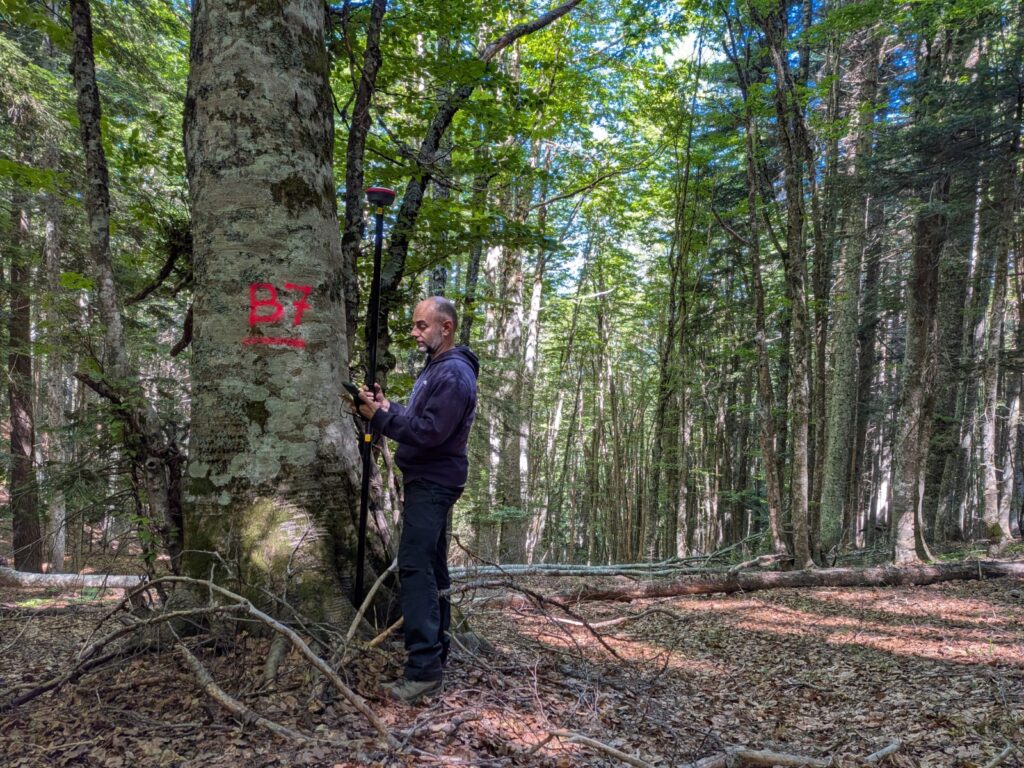
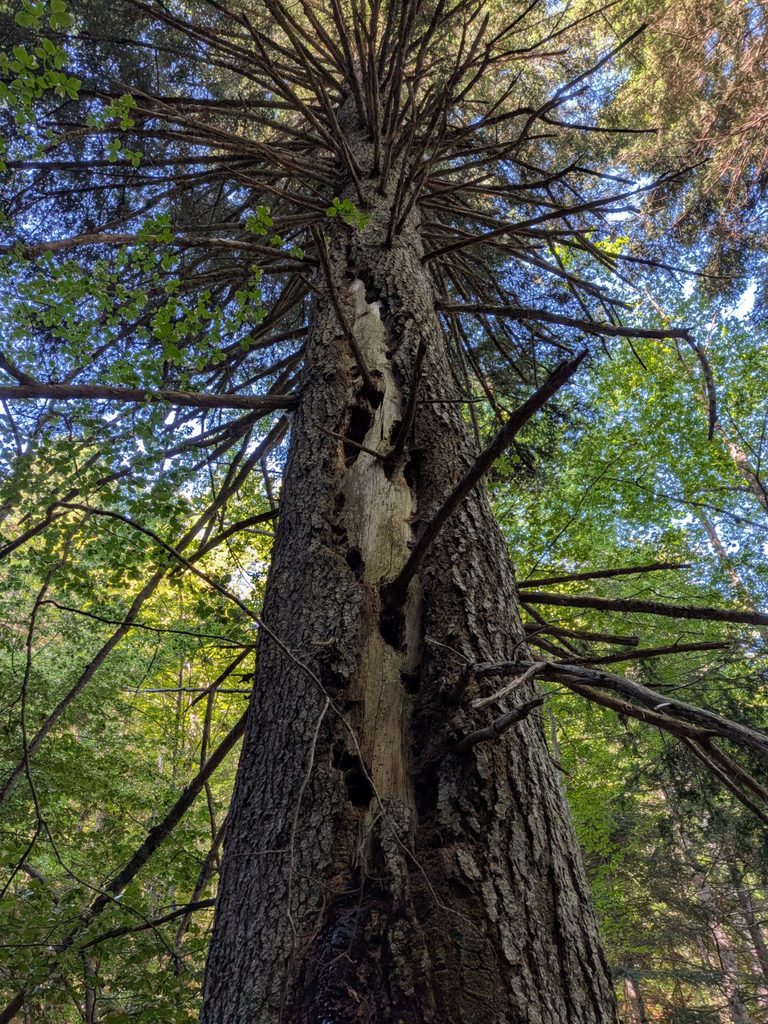
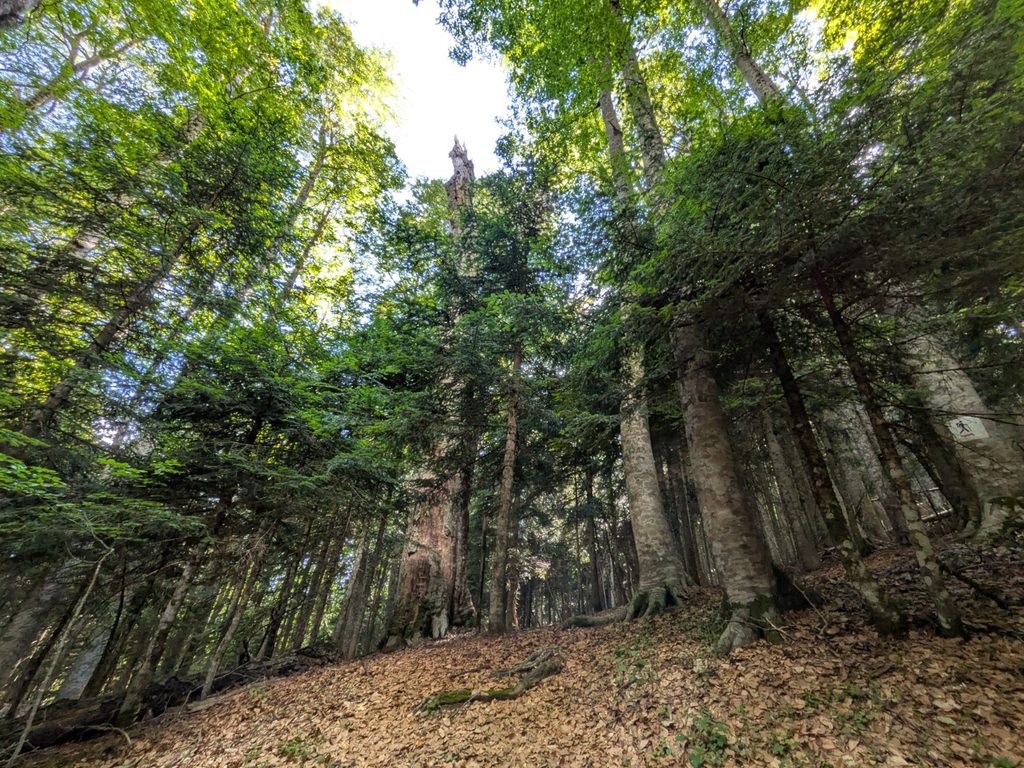
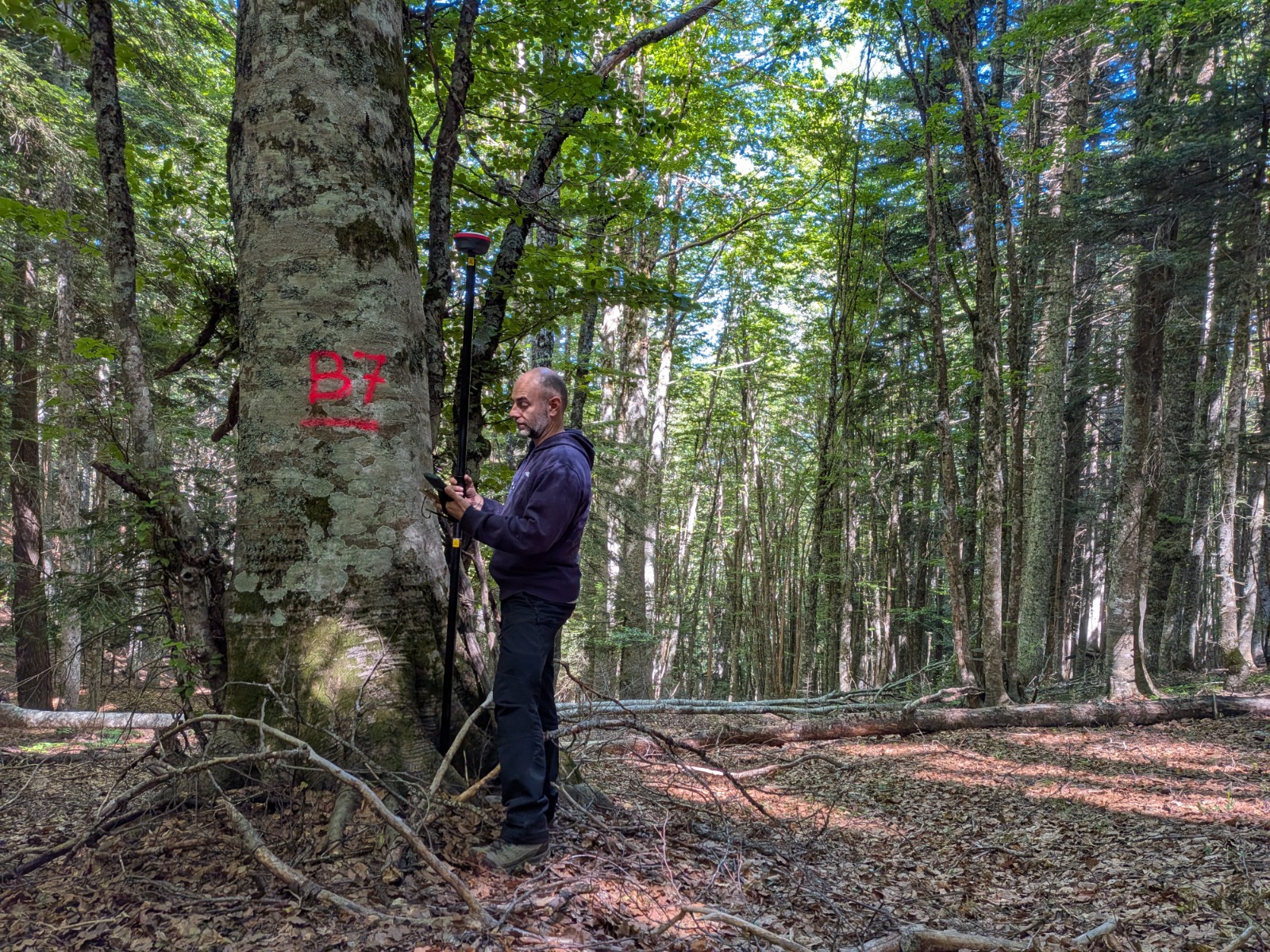
The second day focused on the Gariglione Forest, the core study area of the Sila Living Lab. Managed by the Carabinieri Forestali Biodiversity Unit, the Gariglione State Reserve hosts valuable old-growth forest ecosystems, including silver fir and mixed beech-fir stands of exceptional conservation significance. These visits stimulated extensive discussions on biodiversity conservation, ecological restoration, forest resilience and the role of innovative research approaches for ecological monitoring.
One of the most important outcomes of the visit was the opportunity to connect scientific concepts with practical management experience. Participants could directly observe how long-term conservation strategies, forest monitoring activities and close-to-nature management practices are implemented on the ground. Equally important were the informal exchanges among researchers, which helped identify common challenges and opportunities across the different FORbEST Living Labs. Discussions repeatedly emphasised the importance of integrating scientific evidence with local knowledge, a principle that lies at the heart of the Living Lab approach. The diversity of ecosystems visited – from managed Calabrian pine forests to old-growth silver fir stands—illustrated the wide range of ecological and management questions that can be addressed through collaborative experimentation and learning.
More broadly, this experience highlighted why Living Labs are a cornerstone of FORbEST. Forest ecosystems are complex social-ecological systems where environmental, economic and cultural dimensions are deeply interconnected. Addressing challenges such as biodiversity loss, climate change and sustainable resource use requires approaches that go beyond traditional research and actively involve researchers and local communities. The Sila field visit showed how Living Labs can create spaces where new ecological knowledge is generated, tested and shared in real-world conditions. In doing so, they help transform research into actionable solutions and strengthen the capacity of forest landscapes to deliver biodiversity conservation, climate mitigation and sustainable development outcomes.